-
 COST Action CA20129 "Multiscale Irradiation and Chemistry Driven Processes and Related Technologies" (MultIChem), 2021-2025
The COST Action MultIChem aimed to establish a broad international interdisciplinary, intersectoral cooperation to advance the fundamental understanding of the multiscale irradiation-driven processes and related technologies, paving the path towards major scientific and technological breakthroughs, and socio-economic impacts. By means of pioneering computational methods and modern experimental techniques, the Action exploited irradiation-driven chemistry in selected applications and related technologies such as methods of controlled nanofabrication, nanocatalysis, development of novel types of radiosensitising nanoparticles, and radiotherapies. Further information about the COST Action MultIChem can be found here.
-
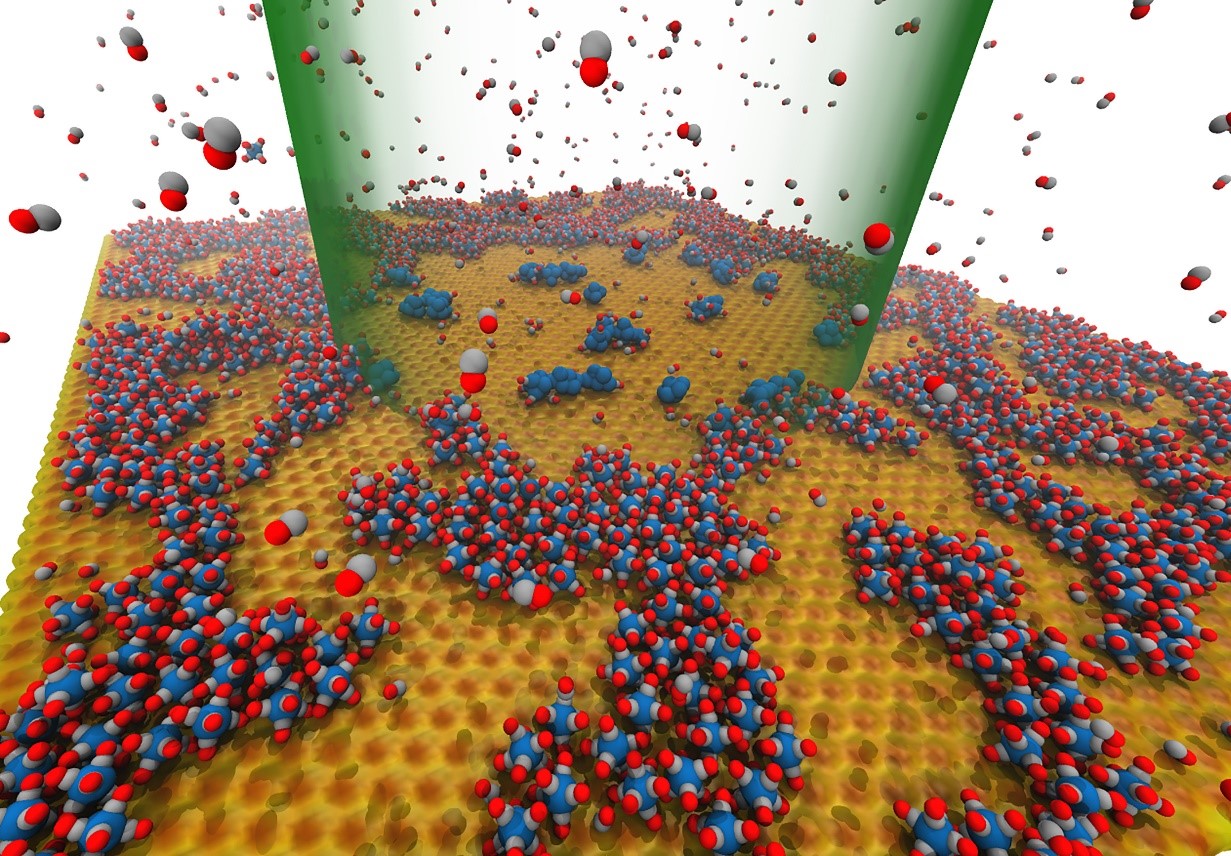 H2020-MSCA-RISE Project "Irradiation driven nanofabrication: computational modelling versus experiment" (RADON), 2020-2025
RADON delivered a state-of-the-art programme that addressed the needs of the research and industry communities working on advancing methods for controllable irradiation-driven nanofabrication, while simultaneously training research and innovation staff in exploiting modern computational and experimental tools in this area of research and technology. Irradiation of nanosystems, especially during their growing or fabrication phase, and controlling them with the nanoscale resolution is a considerable challenge, but if achieved, it will open enormous opportunities and lead to the creation of novel and efficient technologies. RADON aimed at a deeper understanding of the underlying molecular interactions and the key dynamical phenomena in irradiated nanosystems, thereby improving these nanofabrication technologies. Further information about the RADON project can be found here.
-
 COST Action CA17126 "Towards Understanding and Modelling Intense Electronic Excitation" (TUMIEE), 2018-2023
Electronic excitation reaching high energy density is central in many different applications, from materials processing to medical treatments. It emerges when intense radiation arising from sources such as lasers, swift ions, or high-flux X-ray or electron pulses interacts with matter. In general, only partial aspects related to the excitation produced by this type of sources are treated. The lack of a systematic methodology to face the simulation of the underlying phenomena makes it essential to involve scientists from different fields, theoreticians, simulators, and experimentalists. A successful methodology will require smart strategies to make existing solutions, which are appropriate within restricted scopes, work together within a multiscale formalism. Further information about the COST Action TUMIEE can be found here.
-
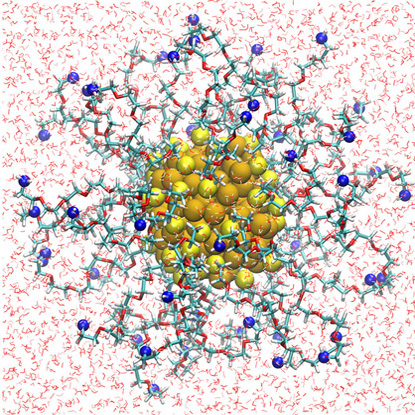 H2020-MSCA-IF Project "Computational characterization of radiosensitising nanoparticles and their properties" (Radio-NP), 2019-2021
Coated metal nanoparticles (NPs) in molecular environments are widely studied for applications in nanobiotechnology and nanomedicine. Understanding of the nanoscale phenomena (formation and transport of secondary electrons, free radicals and their chemical interactions) induced by NP irradiation is crucial for enhancing the potential of novel radiotherapy techniques. The Radio-NP project aims at the atomistic computational analysis of (i) structural properties of coated metal NPs in biological environments and (ii) the impact of these properties on the formation and transport of secondary electrons and radicals in the vicinity of NPs irradiated with ions. The realised approach will combine (i) the ab initio framework to evaluate parameters of quantum transformations of system constituent molecules, (ii) classical molecular dynamics (MD) employed in the advanced scientific software MBN Explorer to characterise NPs and study their interaction with molecular media, and (iii) irradiation-driven MD - the novel and unique implementation in MBN Explorer, to model irradiation-induced chemistry in the vicinity of complex NPs. Further information on the project can be found here.
-
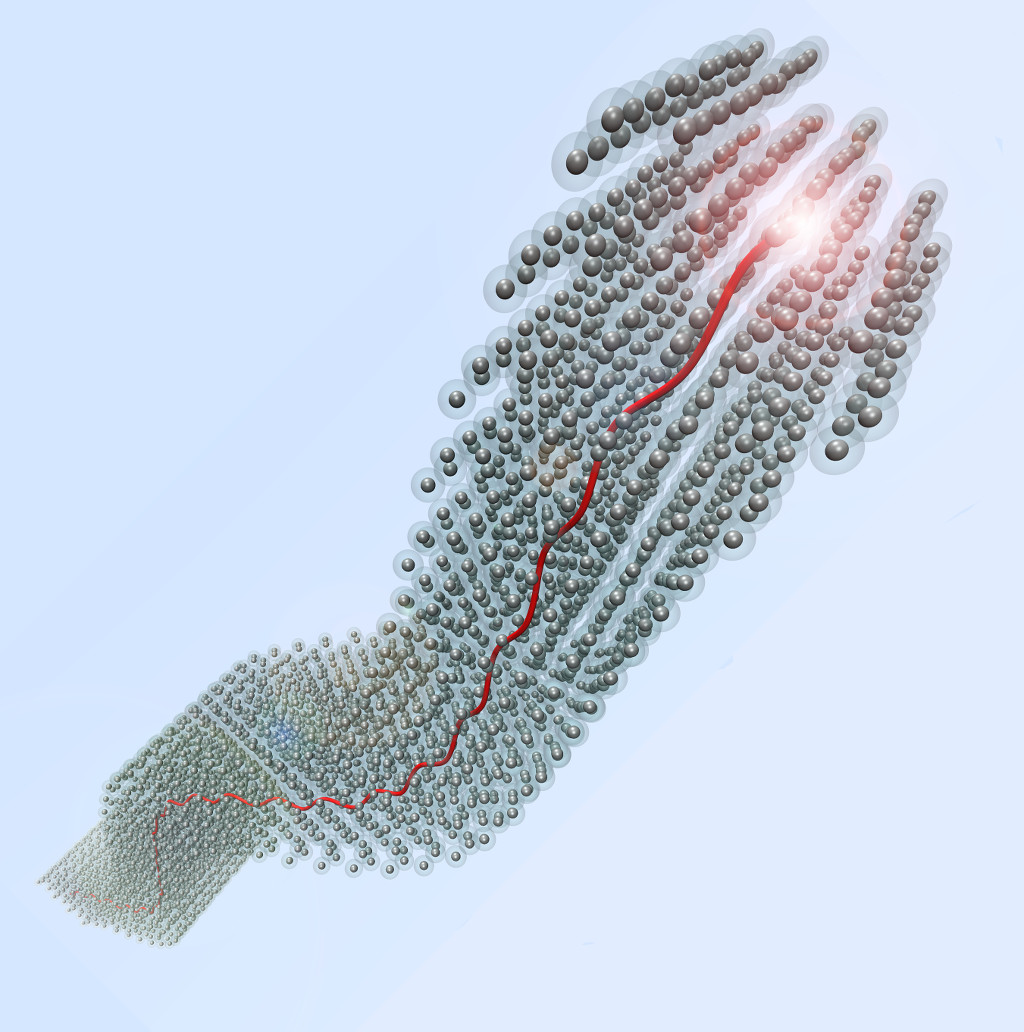 H2020-MSCA-RISE Project "Periodically Bent Crystals for Crystalline Undulators" (PEARL), 2016-2019
This collaborative project was supported by the European Commission in the frame of the Research and Innovation Staff Exchange (RISE) funding scheme in the Marie Sklodowska-Curie Actions under Horizon 2020. The PEARL project aimed at advancing the technologies for the manufacturing of high-quality periodically bent crystals. Such crystals developed in the course of this project were utilised for the construction of novel light sources of high-energy (from 100 keV up to GeV range) monochromatic electromagnetic radiation by means of a crystalline undulator. Further information about the PEARL project can be found here.
-
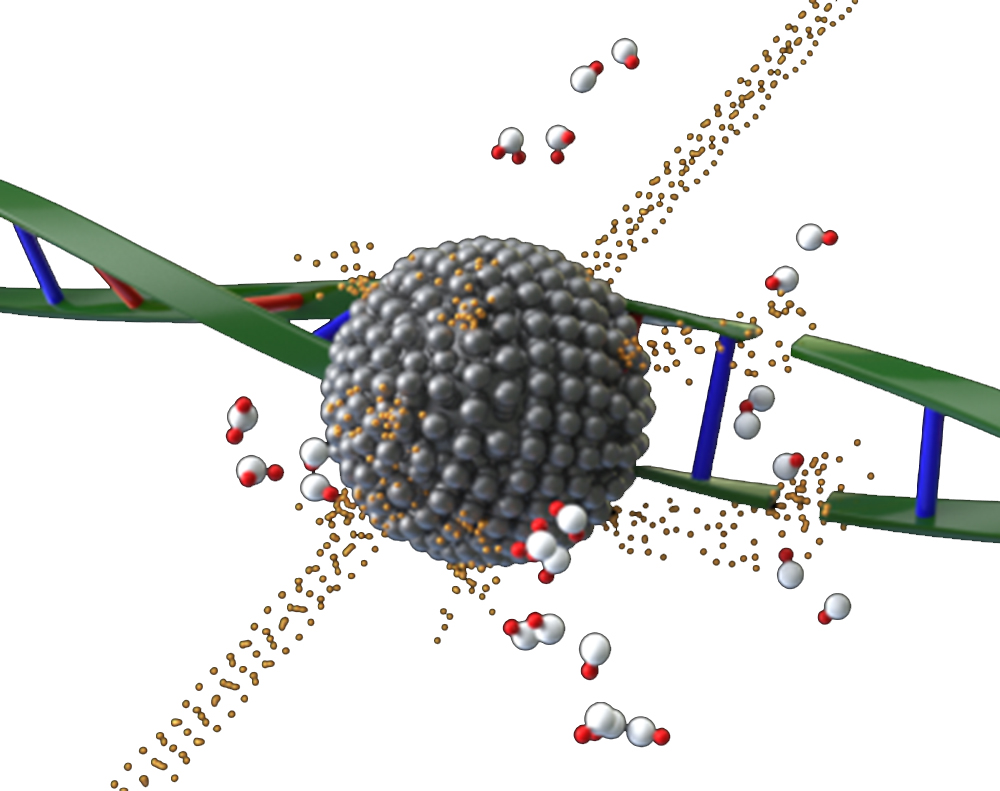 FP7 ITN project "Advanced Radiotherapy, Generated by Exploiting Nanoprocesses and Technologies" (ARGENT), 2014-2018
This collaborative project was supported in the framework of the FP7 European Programme. The main objective of this intersectoral and multidisciplinary Initial Training Network (ITN) was to train a new generation of researchers and experts able to create the platform on which next-generation cancer therapy will be built. The consortium aimed to train a cohort of 13 PhDs (Early Stage Researchers – ESRs) to subsequently act as leaders and ambassadors in the field. The ITN ARGENT strategy relied on: (i) improving our understanding of the processes and mechanisms underlying radiation damage on a nanoscopic level, (ii) the application of the improved know-how in the production and development of functionalised radiosensitzers, and (iii) the developments of concepts and codes for clinical applications taking into account the new information. Further information about the ARGENT ITN project can be found here. -
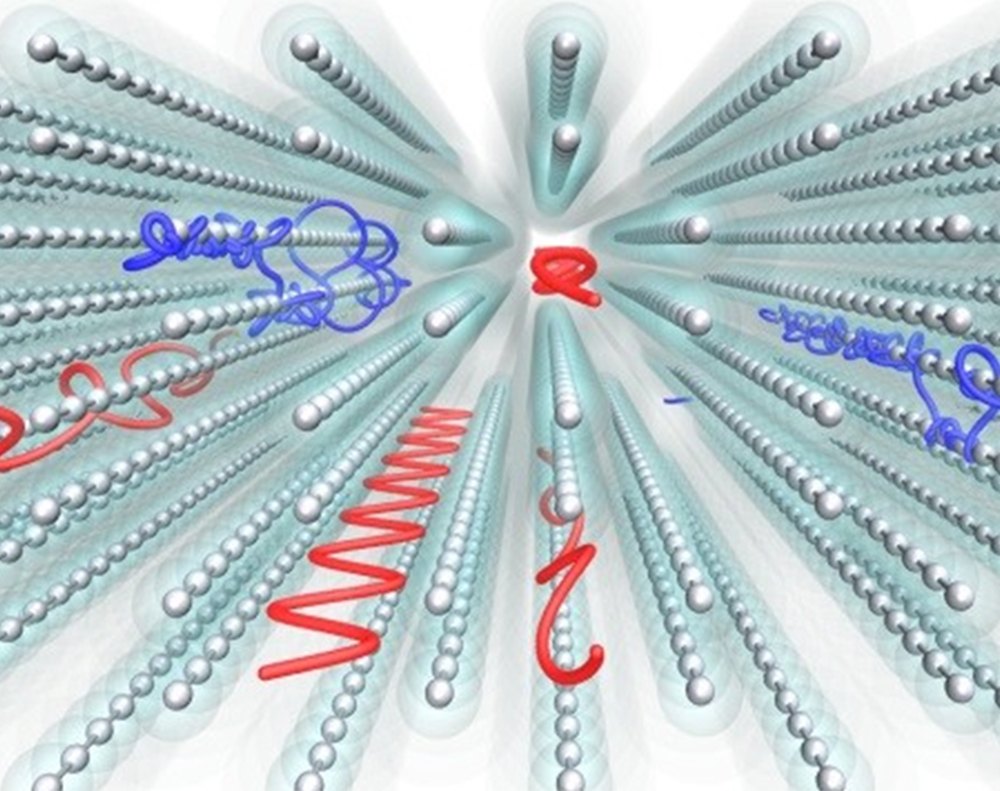 FP7-PIRSES project "Crystalline Undulator: Theory and Experiment" (CUTE), 2011-2015
The CUTE project aimed to facilitate the collaborative research towards theory, design, manufacture and experimental tests of high-quality periodically bent crystalline structures as well as theoretical and experimental studies of the radiation formed in crystalline undulators. The idea of the crystalline undulator is based on the channelling phenomenon. Its advantage is in extremely strong electrostatic fields inside a crystal, which can steer particles much more effectively than even the most advanced superconducting magnets. A crystal with periodically bent crystallographic planes or axes can force particles to move along nearly sinusoidal trajectories and radiate electromagnetic waves in the hard X-ray and gamma-ray frequency range. This opens the prospect of creation of novel light sources that will find their application in technology, medicine and basic sciences: nuclear, solid state and plasma physics, molecular biology, etc. Further information about the project can be found here.
-
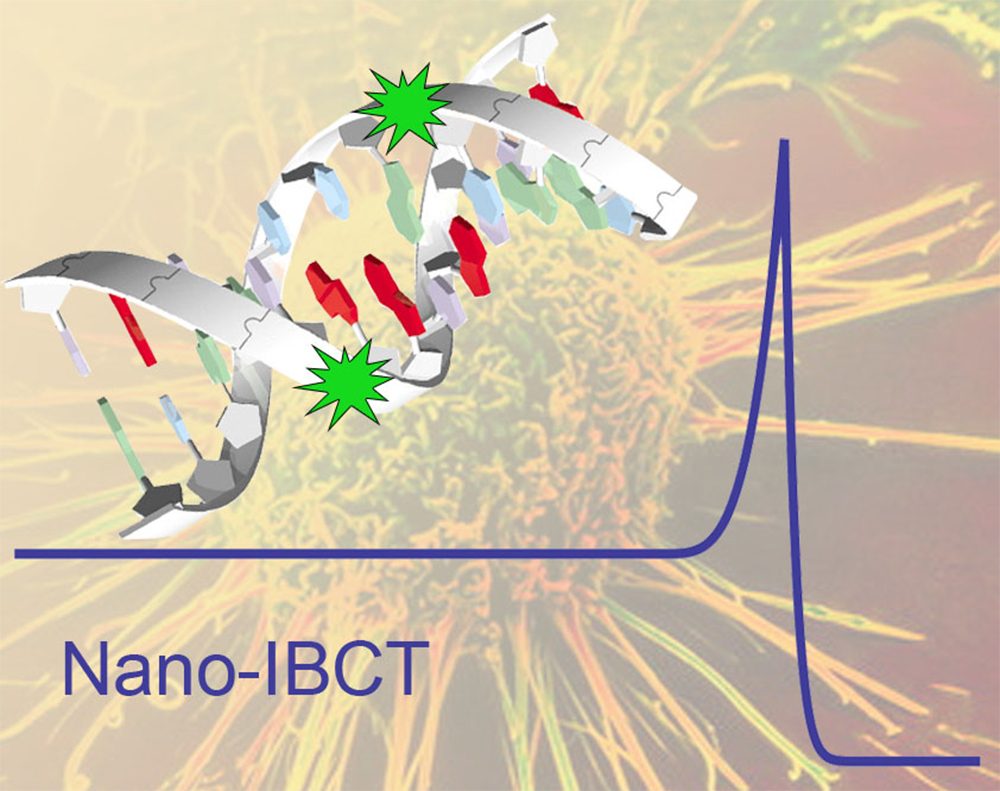 COST Action MP1002 "Nanoscale Insights into Ion-Beam Cancer Therapy" (Nano-IBCT), 2010-2014
Ion beam therapy offers the possibility of excellent dose localisation for the treatment of malignant tumours, minimising radiation damage in normal tissue, while maximising cell-killing within the tumour. However, the full potential of such therapy can only be realised by better understanding the physical, chemical and biological mechanisms, on a range of time and space scales, that lead to cell death under ion irradiation. The COST Action Nano-IBCT therefore aimed to combine, using a multiscale approach, the unique experimental and theoretical expertise available within Europe to acquire greater insight at the nanoscopic and molecular level into radiation damage induced by ion impact. Further information about the COST Nano-IBCT action can be found here.
-
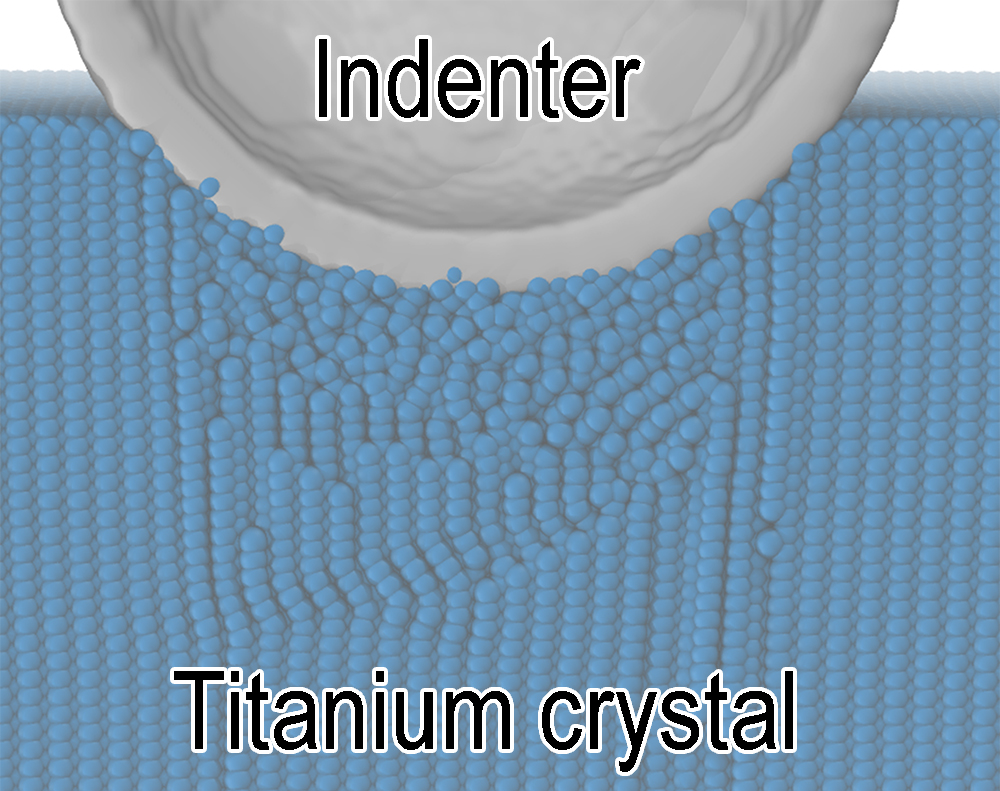 FP7-NMP project "Theoretical analysis, design and virtual testing of biocompatibility and mechanical properties of titanium-based nanomaterials" (VINaT), 2011-2014
This collaborative project was supported in the framework of the FP7 European Programme. The goal of this project was to develop multiscale theoretical models of biocompatible metallic nanomaterials and apply them for the analysis, design and optimisation of the materials. The MBN Research team at GU, led by Prof. Dr. Andrey Solov'yov, was responsible within this project for the modelling of nanoindentation and mechanisms of localised deformation of nanostructured biomaterials. Further information about the VINAT project can be found here.
-
FP6 Network of Excellence (NoE) EXCELL, 2005-2010
The Network of Excellence: to overcome the fragmentation of European research in multifunctional thin films (NoE EXCELL), funded within the Sixth Framework Programme of the European Commission, aimed at integrating research efforts in the area of multifunctional films. The duration of this project was 5 years (2005-2010). During this project, the Virtual Institute of Nano Films (VINF) was created. Partners of the team in this project were:Name Address CO1 Dr. André Leclercq CR2 Prof. Stefano Spigarelli Dipartimento di Meccanica, Ancona, Italia CR3 Prof. Kwang-Leong Choy School of Mechanical, Materials and Manufacturing Engineering, University of Nottingham, UK CR4 Prof. Marie-Paule Delplancke Faculté des Sciences appliquées, Brussels, Belgium CR5 Prof. Dmitry Shtansky MSISA, Moscow, Russia CR6 Prof. Evgeny Vinogradov Institute of Spectroscopy RAS, Troitsk, Moscow Region, Russia CR7 Lauro Pigini SH sistemi Via Parini, 9/A - 60027 OSIMO CR8 Prof. Elazar Gutmanas CR9 Prof. Asuncion Fernandez Camacho Institute of Materials Science of Sevilla, Spain CR10 Prof. Andrey Solov'yov Johann Wolfgang Goethe University, Frankfurt am Main, Germany CR11 Prof. Erika Kalman CRC Institute of surface chemistry and catalysis, Budapest, Hungary CR13 Prof. Brian Johnson Department of Chemistr, Fitzwilliam College, Cambridge UK CR14 Prof. Stan Veprek Department of Chemistry, Technical University Munich, Garching, Germany CR15 Axelle Van Harten VINF AISBL (Bureau A216) Créapôle Allée des Noisetiers, 2B 4031 Angleur CR16 Jean-Paul Henfling Eurogroup Consulting Archipel Centre d’affaires, Liège, Belgium CR17< Philippe Deléarde INNO group Ophira 1- BP 63- Place Joseph Bermond Tekniker VINF Dr. Javier Barriga TEKNIKER Otaola 20 · P.K. 44 20600 EIBAR, Gipuzkoa, Spain NanoFab VINF Dr. Alessandro Patelli NanoFab Via delle Industrie, 5 30175 Venezia-Marghera, Italy -
FP6 STREP project "Photon Emission in Crystalline Undulators" (PECU), 2005-2009
The MBN Research team at GU, led by Prof. Dr. Andrey Solov'yov, took part and coordinated the collaborative research project entitled 'Photon emission in crystalline undulators' funded within the Sixth Framework Programme of the European Commission. The project was devoted to a theoretical and experimental study of the possibility of creating a new, powerful source of high-frequency monochromatic electromagnetic radiation of a free-electron laser (FEL) type formed by a bunch of ultra-relativistic particles channelling through a periodically bent crystal. Two fundamental phenomena were investigated: (1) the undulator radiation by ultra-relativistic positrons during channelling in periodically bent crystals, (2) the lasing effect in such systems. The final goal of our efforts was to construct new sources of monochromatic electromagnetic radiation, a crystalline undulator and a gamma-laser operating in the energy range from X- up to gamma-rays. These energies by far exceed those which are achievable at present or are planned to be achieved by means of conventional undulators and FELs based on the action of a magnetic field. The partners of the group in this project were:Partic. Role Partic. No. Participant name Participant short name Country CO 1 A Institute for Theoretical Physics, Johann Wolfgang Goethe University JWGU-ITP Germany CR B Johann Wolfgang Goethe University JWGU Germany CR 2 University of Aarhus, Department of Physics and Astronomy UAAR-DPA Denmark CR 3 Imperial College of Science, Technology and Medicine Imperial United Kingdom CR 4 Institute for Nuclear Physics, University of Mainz Uni Mainz Germany