The 1st Training School of the MSCA Doctoral Network "MultiScale phenomena in Radiation Damage" (MS-RADAM) took place from 7 to 24 September 2026 in Rastede, Germany. The Training School followed the MS-RADAM Inauguration Meeting held on 4 September in Oldenburg and brought together the network's 14 Doctoral Candidates (DCs) for an intensive programme of scientific, complementary and communication skills training.
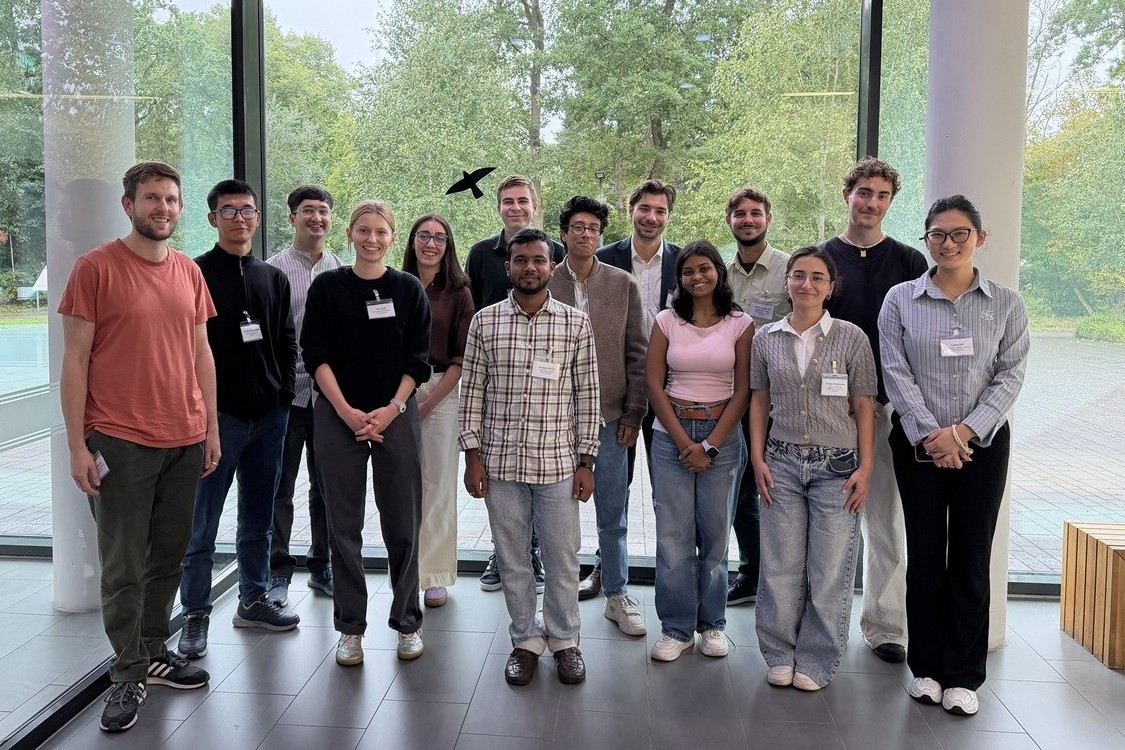
The first part of the Training School, held from 7 to 19 September, was dedicated to core science skills and combined lectures with practical hands-on tutorials. The programme covered a broad range of topics directly related to the MS-RADAM research programme, including multiscale scenarios of radiation-induced biodamage, collision theory, quantum-chemistry methods, molecular dynamics, radiation-induced processes involving nanoparticles, quantum effects in biomolecular systems, particle propagation in biological media, irradiation-induced processes in biomolecular and DNA-based systems, radiation chemistry of biological media, foundations of radiotherapy, quantum biology, and applications of MS-RADAM research in medicine and technology.
An important component of the scientific training was the hands-on tutorials in computational methods for Meso-Bio-Nano systems, providing the Doctoral Candidates with practical experience in state-of-the-art computational modeling using the MBN Explorer and MBN Studio software packages. The scientific lectures and tutorials were delivered by researchers from the MS-RADAM partner institutions and covered theoretical, computational and experimental perspectives on radiation-induced phenomena across different spatial and temporal scales.
The second part of the Training School, held from 21 to 24 September, focused on complementary and communication skills. The programme addressed scientific strategy and laboratory management, scientific writing, innovation and intellectual property, as well as modern approaches to science communication and publishing. The DCs also received training related to artificial intelligence in publishing and prepared short personal video contributions introducing their backgrounds and roles within MS-RADAM.
The 1st MS-RADAM Training School provided the Doctoral Candidates with a common scientific foundation for their individual research projects while developing the complementary and communication skills required for their future scientific careers. It also created opportunities for the DCs to work together, exchange ideas and strengthen links across the MS-RADAM network at an early stage of their doctoral projects.
Further information about the project, its partners and the individual Doctoral Candidate research projects can be found on the MS-RADAM Doctoral Network website.
The MS-RADAM project has received funding from the Horizon Europe Programme (HORIZON-MSCA-2024-DN-01 call) under Grant Agreement No. 101225527.